Purchasing a Medical Co-op vs. Condo in NYC: What Healthcare Buyers Need to Know
For physicians and healthcare professionals looking to purchase medical office space in New York City, understanding the difference between a medical co-op and a medical condo is critical. While both can provide long-term stability and ownership benefits, the structure of each ownership type dramatically affects the approval process, monthly costs, flexibility, and long-term financial obligations.
Many buyers assume purchasing medical space works the same way as buying any other commercial property. In NYC, that is often not the case.
What Is a Medical Co-op?
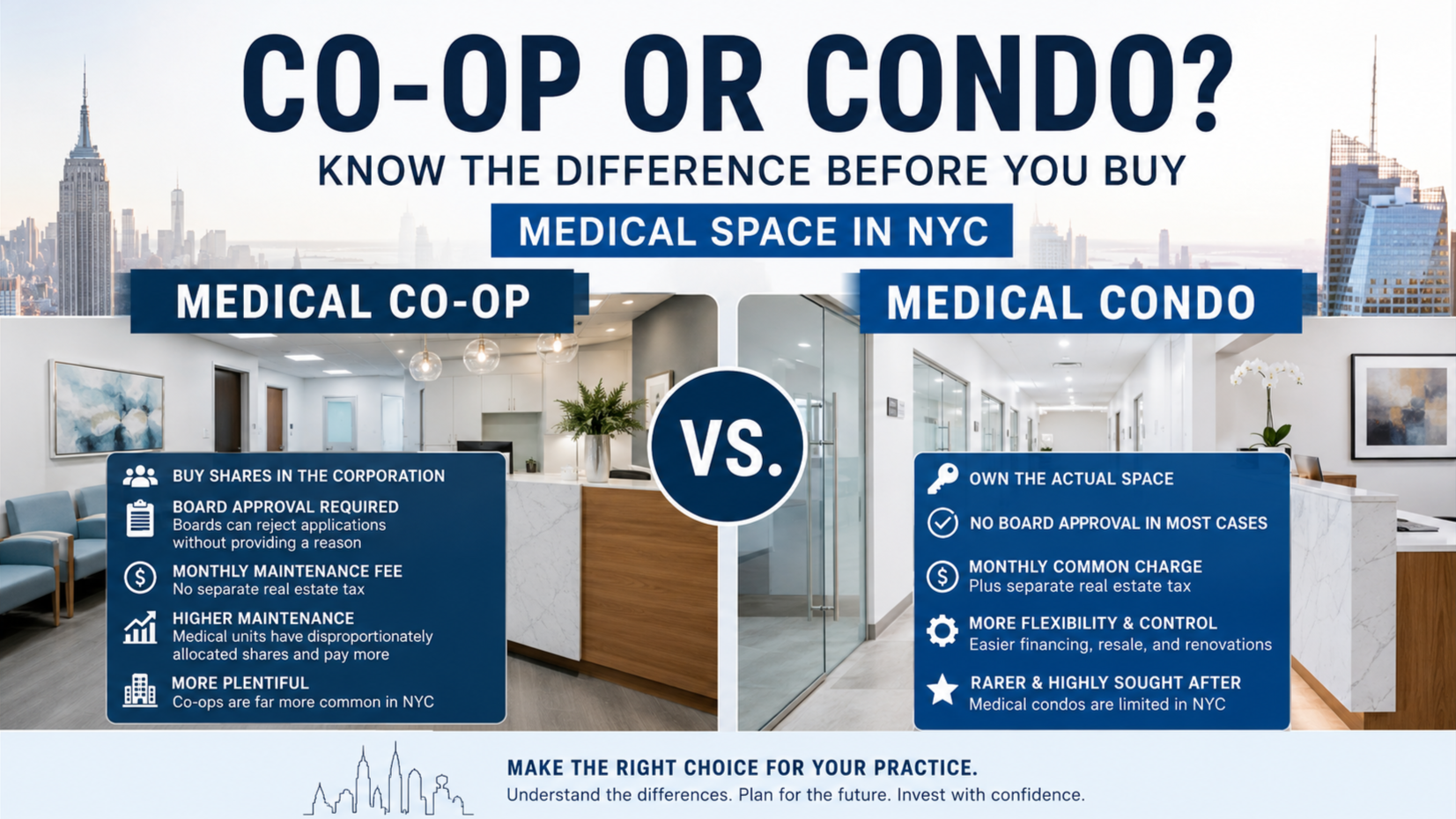
A medical co-op is not direct real estate ownership. Instead of purchasing the actual office unit, the buyer purchases shares in the corporation that owns the building. Those shares grant the shareholder the right to occupy a designated space. This structure introduces one major factor: board approval.
Unlike a condo purchase, co-op boards typically require:
A detailed board package
Financial disclosures
Personal and professional background information
An interview process
Formal board approval before closing
Perhaps most importantly, a co-op board does not need to provide a reason if they reject an applicant. Even a financially qualified physician with strong credentials can be denied without explanation.
For many medical professionals, this creates uncertainty and can significantly delay occupancy timelines.
The Financial Structure of Medical Co-ops
Medical co-ops also operate differently from residential co-ops in terms of expenses. Instead of paying a common charge like a condo owner, co-op owners pay a monthly maintenance fee. This fee often includes building operating expenses, staff, utilities, and the building’s underlying mortgage and taxes.
In medical co-ops, the allocation of shares is usually disproportionately higher than residential units because medical practices are considered revenue-generating businesses. As a result:
Medical units typically carry significantly higher maintenance fees than similarly sized residential units
When the building increases maintenance charges, medical shareholders often absorb a disproportionately larger increase
Long-term operating costs can become substantially higher over time
Additionally, while co-op owners do not pay separate real estate taxes directly, those taxes are effectively built into the maintenance structure.
What Is a Medical Condo?
A medical condo functions more like traditional property ownership. The buyer owns the actual office unit itself rather than shares in a corporation.
This structure offers several advantages:
Greater ownership control
Simpler transaction procedures
More flexibility with financing and resale
Faster closing timelines
Fewer board-related hurdles
Condo owners pay a monthly common charge to cover shared building expenses. Unlike co-ops, condo owners also pay separate real estate taxes directly on their unit. While condos often have higher purchase prices upfront, many buyers value the simplicity and autonomy they provide.
Why Medical Condos Are So Desirable in NYC
One major reality in Manhattan and throughout NYC is supply. Medical co-ops are far more plentiful, while true medical condos are considerably rarer. Because of their scarcity and flexibility, medical condos are often highly sought after by healthcare professionals who want:
Faster transactions
Fewer approval risks
Easier practice transitions
Better long-term control of their space
This limited inventory can drive pricing higher, but many buyers consider the tradeoff worthwhile compared to the operational limitations sometimes associated with co-ops.
Which Structure Is Better?
There is no universal answer. The right fit depends on:
Your specialty
Your financing structure
Your timeline
Your long-term practice goals
Your tolerance for board oversight and restrictions
A co-op may offer a more accessible entry point in certain locations, while a condo may provide greater flexibility and predictability over time. The key is understanding the differences before entering into a transaction.
Final Thoughts
Purchasing medical office space in NYC involves more than simply finding the right location. The ownership structure itself can impact everything from monthly expenses and tax obligations to approval timelines and future resale opportunities.
Whether considering a co-op or condo, healthcare professionals should work closely with experienced medical real estate brokers – such as those at Wexler Healthcare & Commercial Properties – attorneys, and financial advisors who understand the unique nuances of NYC healthcare properties.
Because when it comes to medical real estate in New York City, knowing the difference upfront can save months of frustration — and potentially hundreds of thousands of dollars over the life of ownership.
At Wexler Healthcare & Commercial Properties, we specialize in guiding both investors and owner-users through the acquisition, financing, and positioning of medical office assets to support long-term success.
Recent Listings